
Membro VIP

Equipamento de inspeção visual inteligente para peças industriais
Equipamento de inspeção visual inteligente para peças industriais
Detalhes do produto
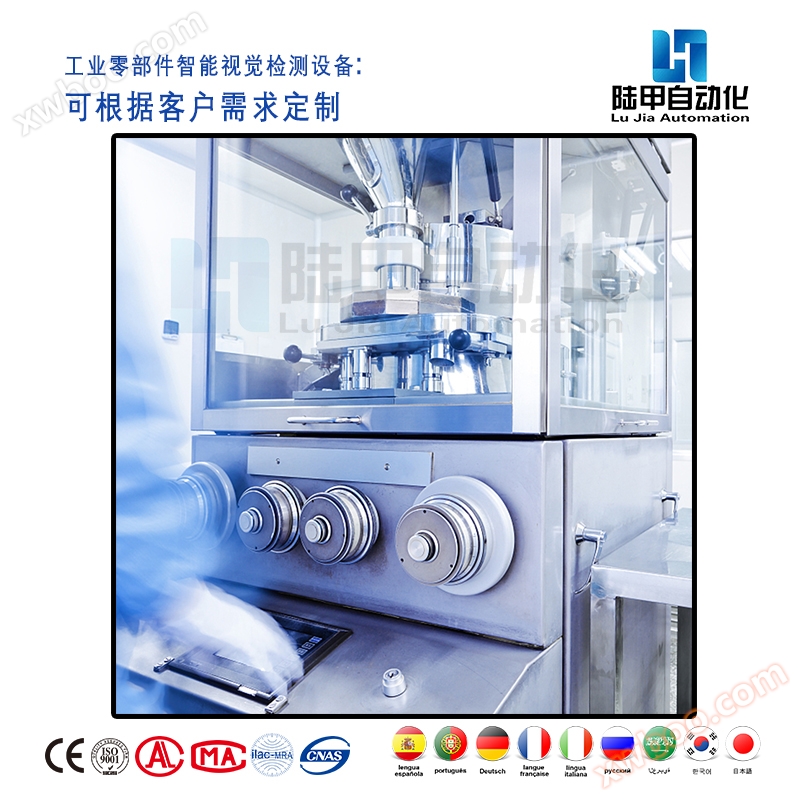
Equipamento de inspeção visual inteligente para peças industriais
Como uma empresa de pesquisa e desenvolvimento de equipamentos de automação inteligentes de embalagem em casa e no exterior,Shanghai Armoured Automation Technology Co., Ltd.Os serviços técnicos fornecem soluções tecnológicas para equipamentos de inspeção visual inteligente para a indústria de fabricação chinesa com componentes industriais sincronizados internacionalmente. Equipamento de inspeção visual inteligente para peças industriaisAplicar a: Indústria farmacêutica, alimentos, bebidas, produtos químicos, produtos de saúde, eletrônicos, eletrodomésticos, químicos, automóveis e plásticos e hardware!
Inspeção visual inteligente de peças industriaisEquipamentoEmA tecnologia de processamento de imagem digital é uma indústria tecnológica emergenteJá tem aplicações em áreas como sistemas de automação, detecção de peças automotivas e reconhecimento inteligente. Tornou-se uma das soluções importantes para a lenta velocidade e a baixa eficiência da detecção manual convencional. Como as peças industriais apresentam muitos defeitos em termos de detalhes na produção real, é necessário escolher os algoritmos adequados para identificá-las e testá-las com precisão. Este artigo destina-se às peças da placa traseira da caixa de absorção de energia do automóvel, projetou o esquema geral do sistema de detecção de imagem, construiu uma plataforma de hardware experimental e descreveu em detalhes a composição de vários dispositivos e sistemas de iluminação usados pelo sistema de visão, e depois realizou a calibração do sistema de câmera para concluir a correção do efeito de distorção. Após a obtenção da imagem corrigida, a pesquisa foi focada em técnicas-chave como pré-processamento da imagem, detecção de bordas e medição de parâmetros geométricos de peças. No pré-processamento, primeiro analisamos as categorias de ruído da imagem, comparamos vários algoritmos de filtragem para descobrir o algoritmo de filtragem adequado para a imagem neste artigo. Além disso, na detecção de bordas de imagem, os algoritmos clássicos de detecção de bordas são comparados, fornecendo a base para a extração de características subsequentes. Ao detectar as características básicas da imagem, os círculos e as linhas retas na imagem são detectados separadamente e os parâmetros dos resultados da detecção são otimizados para melhorar o efeito da detecção de círculos e linhas retas. Ao detectar a ranura na imagem, um algoritmo de correspondência de modelo foi usado para identificar com precisão a localização da ranura. Depois de entrar no teste do tamanho da peça, o texto também estudou o método de identificação de classificação de três situações de peças intactas, peças de ponto de solda e peças arranhadas. Em primeiro lugar, através da detecção de borda, com base em garantir a clareza e a integridade da borda da imagem, o uso de algoritmos de histograma de direção de gradiente para a extração de características e a utilização de redes neuronais de probabilidade e SVM para o reconhecimento de classificação, alcançou bons efeitos de classificação. No entanto, a dimensão vetorial da característica é maior e as informações de extração da característica são misturadas, de modo que as informações críticas da imagem são difíceis de aproveitar ao máximo. O texto melhorou o algoritmo de histograma de direção de gradiente, interpolação bi-linear do algoritmo de extração de características de histograma de direção de gradiente, obteve vetores característicos mais capazes de refletir características detalhadas, e depois identificou-os com redes neurais e máquinas vetoriais de suporte, ao mesmo tempo que melhorava o efeito anti-mistura de valores característicos, também melhorava a precisão de reconhecimento de classificação de imagens. A implementação deste módulo é baseada em Visual C ++ e MATLAB, incluindo o desenvolvimento de interfaces de sistemas visuais e a escrita de algoritmos. Este artigo implementa a detecção das características das peças, com identificação de diferentes tipos de classificação de peças. Os resultados do estudo no artigo refletem um certo valor de engenharia, ao mesmo tempo que fornecem um certo significado para a aplicação de técnicas de medição de imagem e identificação de categorias de peças.
Intelligent visual inspection equipment
As a well-known packaging intelligent automation equipment research and development enterprise at home and abroad, Shanghai Lujia Automation Technology Co., Ltd. provides technical solutions for the Chinese manufacturing industry to synchronize intelligent visual inspection equipment for industrial parts. Widely used in: pharmaceutical, food, beverage, daily chemical, health care products, electronics, electrical appliances, chemicals, automotive industry and plastics and hardware industries!
Intelligent visual inspection equipment for industrial components is an emerging technology industry in digital image processing technology. It has been widely used in automation systems, automotive parts inspection and intelligent identification. It has become one of the important solutions for slow manual detection and low detection efficiency. Due to the defects in the details of industrial parts in actual production, it is necessary to use an appropriate algorithm to accurately identify and detect them. In this paper, the overall scheme of the image detection system is designed for the back part of the car energy-absorbing box. The experimental hardware platform is built, and the components of the various components and lighting systems used in the vision system are introduced in detail. Then the camera system is calibrated and completed. Correction of distortion effects. After obtaining the corrected image, key technologies such as image preprocessing, edge detection and part geometric parameter measurement were studied. In the preprocessing, the noise class of the image is first analyzed, and various filtering algorithms are compared to find the filtering algorithm suitable for the image. Furthermore, in the image edge detection, the classic edge detection algorithm is compared, which provides the basis for the subsequent feature extraction. When detecting the basic features of the image, the circles and lines in the image are detected separately, and the parameters of the detection result are optimized to improve the detection effect of the circle and the line. When detecting the slot in the image, a template matching algorithm is used to accurately identify the position of the slot. After the inspection of the part size, the classification and identification methods of the intact parts, the solder joint parts and the scratch parts were also studied. Firstly, through the edge detection, on the basis of ensuring the image edge is clear and complete, the gradient direction histogram algorithm is used for feature extraction, and the probabilistic neural network and SVM are used for classification and recognition, and a good classification effect is obtained. However, the feature vector dimension is high, and the feature extraction information is aliased, so that the key information of the image is difficult to fully utilize. In this paper, the gradient direction histogram algorithm is improved, and the gradient direction histogram feature extraction algorithm is bilinearly interpolated. The feature vector which can reflect the detailed features is obtained, and then the neural network and support vector machine are used for recognition. The anti-aliasing effect of the value also improves the accuracy of classification and recognition of images. The implementation of all modules of this topic is based on Visual C++ and MATLAB, including visual system interface development and algorithm writing. This paper realizes the detection of part features and the classification and identification of different types of parts. The research results in this paper reflect a certain engineering value, and provide some reference for the application of image measurement technology and the classification and identification of parts.
Inquérito em linha
-
Contactos
-
Empresa
-
Telefone
-
E- mail
-
WeChat
-
Código de verificação
-
Conteúdo da Mensagem
-